What Is a Flag in Aerial Straps? The Complete Guide to One of the Art's Most Iconic Positions
If you've watched aerial straps for more than five minutes, you've seen a flag. The body held horizontal, arms locked, legs floating like the whole thing costs nothing. It's the position most people screenshot and send to a coach asking "how long until I can do this?"
This guide answers that question properly. What a flag actually is, what your body needs to hold one, how to build it step by step, and the mistakes that keep most artists stuck.
What Is a Flag, Exactly?
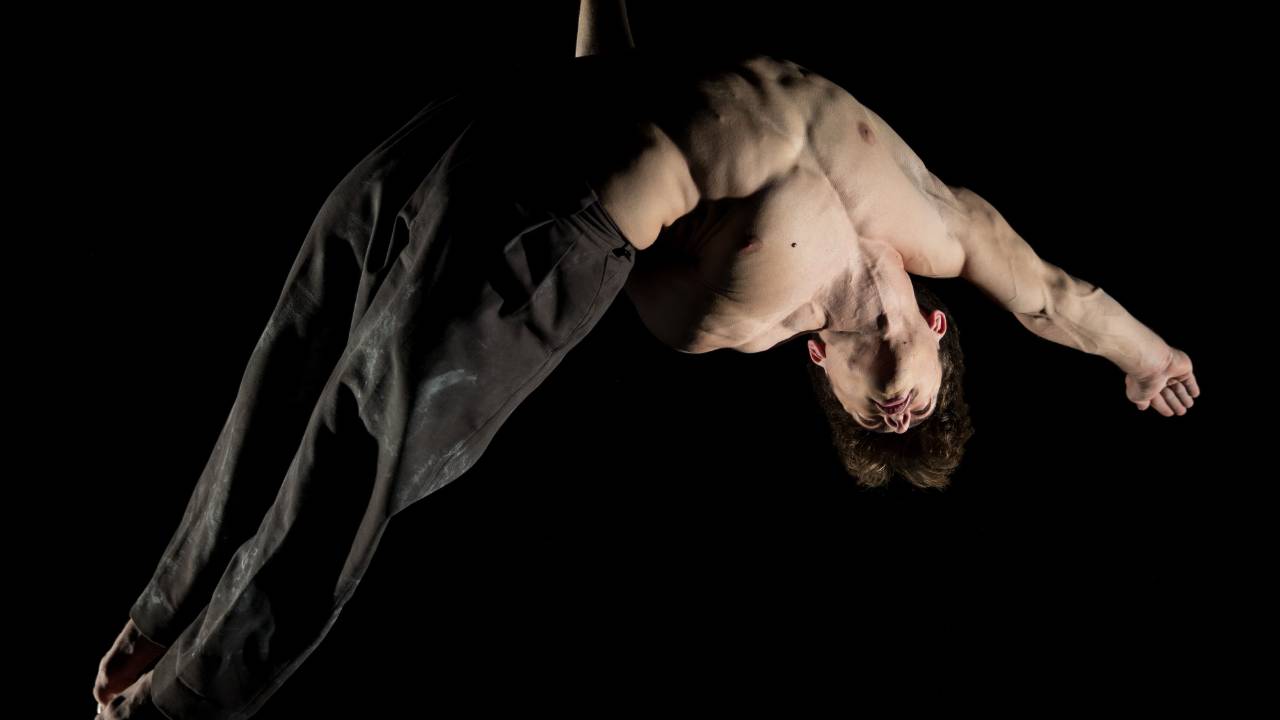
A flag is a straps position where your body is held horizontally in the air, supported by your arms, with your hips, spine, and legs in one straight line. Nothing rests on the apparatus except your hands and wrists. Everything else is held there by tension.
There isn't one flag, there's a family of them:
Two-arm flag. Both hands on the straps, body horizontal. This is the entry point and the position every other variation is built from.
One-arm flag. The same shape supported by a single arm. Roughly four times harder than it looks, because the load doubles and the forces on your shoulder increase dramatically.
Flag from a swing. The flag caught out of momentum rather than pressed into statically. Visually the most impressive, technically the most demanding, and the last one you should learn.
1 Arm Spin Flair to Flag. A one-arm flair carried through the spin and locked directly into the flag position. It combines rotation, momentum control, and a one-arm hold in a single sequence, which makes it one of the clearest demonstrations that an artist owns the flag rather than simply reaching it.
The reason the flag is such a milestone is that it can't be faked. There's no grip trick, no momentum, no apparatus wrap doing the work. If your shoulders, core, and lats aren't ready, the position simply doesn't happen. That's what makes it a genuine measure of where you are as a straps artist.
What Your Body Needs Before You Attempt a Flag
Three qualities decide whether a flag is close or far away for you right now.
Position. Most failed flags aren't a strength problem at all, they're a position problem: the shape is there, but the body isn't organized correctly around the shoulders.
Pulling strength, straight arm or bent arm. There isn't one correct arm position in a flag. It depends on your flexibility and your strength. Artists with the side bend and back flexibility to open the position hold their flag with straight arms, which costs far less energy and lets them stay there longer. Artists with more pulling strength, or who simply have the energy to spend, hold it with the arms bent, closer to a pull-up position. Both are valid flags. What matters is knowing which one your body is built for right now, because the straight-arm version demands a range of motion you may not have yet, and the bent-arm version demands strength you have to build.
Body line and twist. The flag doesn't have to be a perfectly straight horizontal line. You can hold it slightly arched, and most artists do. The goal is to almost come and rest on your arm, twisting toward the side of the straps and the supporting arm, which makes the position significantly easier to hold. Your ribs stay controlled and your legs stay glued together, but the shape is a working position, not a photo pose.
This is also why the flag can't be trained on the floor. There's no equivalent on the ground, the twist and the load only exist in the air. The benchmark is simple: hold it 15 seconds on two arms, then move to one arm. The day you hold 10 seconds on one arm, you own your flag.
How to Build the Flag, Step by Step
The flag is built in layers, and each layer removes one thing that was helping you. Each step has to feel comfortable before the next one makes sense.
1. Mimic the position with the straps over your hips. Let the straps pass across your hips so they carry your weight. You're not holding anything yet, which is the point: with no strength demand, you can put all of your attention on placement, the twist, and how the body organizes itself in the shape.
2. Two arms with one leg pressing on the straps. Keep one leg in contact with the straps and push against them. This fakes the position while taking a large part of the load, and it's also where you learn the descent, which matters as much as the hold itself.
3. Two arms with a spot. Same position, no leg helping, but someone supporting you. The spot lets you find the real shape and the real load without failing out of it.
4. Two arms on your own. No leg, no spot. When you can hold this for 15 clean seconds without your hips sagging, the two-arm flag is yours.
5. One arm with a spot. The load roughly doubles, so the spot comes back for the same reason it did at step three: you need repetitions in the correct position, not near-misses.
6. One arm on your own. The day you hold 10 clean seconds here, you own your flag. Only at that point do the flag from a spin, the flag from a swing, and the 1 Arm Spin Flair to Flag become sensible goals rather than injury risks.
Trying to jump from step two straight to step four is the single most common reason artists spend a year on a position that should take a few months.
Common Flag Mistakes
Chasing a perfectly straight line. A slight arch is normal and often makes the position easier to hold. What kills the flag isn't the arch, it's losing control of it: hips sagging, legs separating, and the body collapsing out of the twist instead of resting into it.
Expecting floor work to build the flag for you. General strength work helps, but the flag itself only exists in the air. The twist toward the straps, the way the body settles onto the supporting arm, the load through the wrist, none of it has a version you can rehearse on the ground. Time on the apparatus is not optional here.
Not filming yourself. What a flag feels like and what it looks like are rarely the same thing. Your internal sense of where your body is in space is unreliable in the air, and every artist discovers this the first time they see the footage. Film every attempt.
How Long Does a Flag Take?
Honest answer: if you already practice some kind of sport in your life and you train consistently two to three times a week, a clean two-arm flag takes somewhere between three and nine months. The range is wide because it depends almost entirely on your starting point and whether your training is structured or improvised.
The artists who get there fastest aren't the strongest ones. They're the ones who spent real time on the assisted steps, mimicking the position and working with a leg or a spot, while everyone else was throwing half-flags and hoping.
Where to Start Today
If the flag is your goal, the first step isn't attempting one. It's finding out honestly where your side bend and back flexibility, pulling strength, and hollow body control are right now, and then following a plan that closes those gaps in the right order.
That's exactly what the Straps Starter Kit gives you, for free: 5 detailed movement analysis videos, a 28-day strength program built specifically for straps, and a personalized massage routine to support recovery as you train.
Get your free Straps Starter Kit →
Whether the flag is months away or just out of reach, the path there is the same: build the foundation, respect the progression, and film the work.
A free 28-day program with movement analysis videos to build the strength, flexibility, and technique foundation every straps beginner needs.